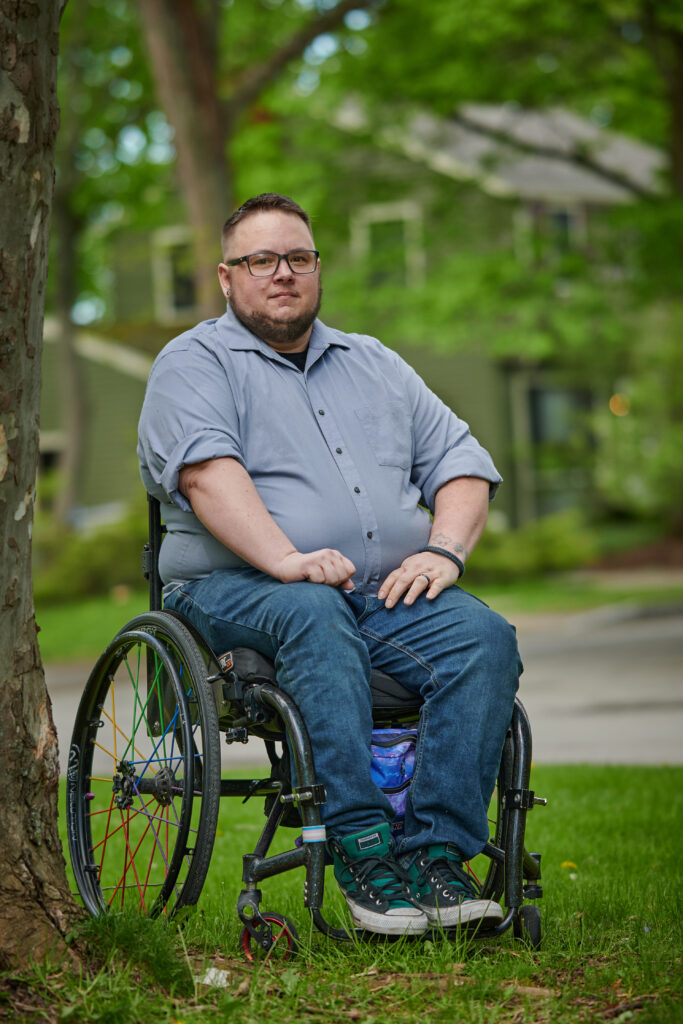
We spoke to Kadin (he/they) in Rochester, NY on May 8, 2026. Kadin served as an E-4 Specialist in the US Army from 2003 until 2008 and worked as a medic. He was honorably discharged due to parenthood. Kadin comes from a military family, and he enlisted because he knew service was a path to making college possible for him.
Kadin wasn’t out when they enlisted, but they told us that they “knew that I wasn’t a girl, but I didn’t have any terms for it. I didn’t know any queer people.” They were also raised Roman Catholic, and they didn’t feel like coming out was open to them at home. Kadin served during Don’t Ask, Don’t Tell, at a time when queer people were at risk of being less than honorably discharged and losing their benefits if their identities were discovered. When he entered the military, he heard stories about LGBTQ+ service people who had been “ratted out” and quickly learned that queerness was a liability. Kadin particularly worried about his access to the GI Bill, which meant that he, like many others, did his best to pass. “When you go in,” he told us, “you learn to keep your head down, to hide… you couldn’t let anybody find out [that you were queer].”
Kadin came out in 2015, and today he lives as an out gay trans man with his husband and three children and runs an embroidery business. His service in the US Army impacted many aspects of his life. He suffered a back injury from a “fudged” and unreported incident that manifested into a disability. He also experienced gender-based discrimination, and he harbors resentment that he was never given an opportunity to deploy. Yet, Kadin also credits their time in the military for shaping their sense of self. “I realized that I hated being perceived as female in the military,” he explained. “It made me realize I’m one of the guys, not one of the girls.”