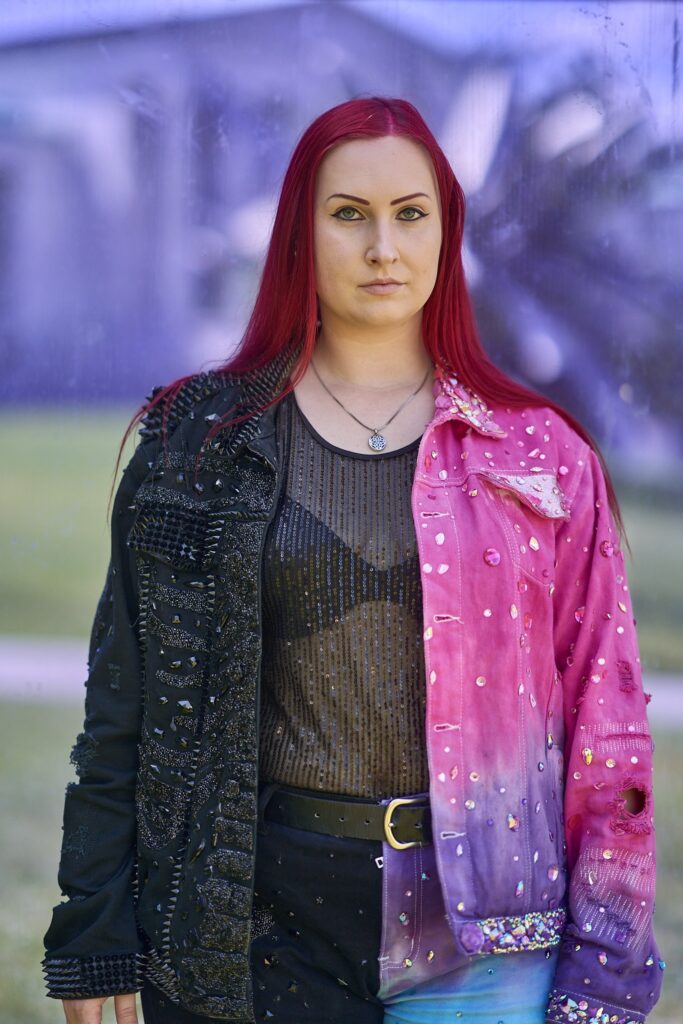
We spoke to Anna (she/they; he/they in drag) in Buffalo, NY on June 12, 2026. Anna served in the US Air Force Reserves as a senior airman from 2017 to 2021, and she was honorably and medically discharged. Anna initially considered enlisting after high school, but her partner at the time dissuaded her. Years later, when they were struggling with the loss of their mother, a divorce from an abusive partner, and dissatisfaction with work, an older veteran encouraged them to reconsider the Air Force. They ended up joining, they said, because “I felt stuck, and I wanted a higher purpose in life.”
Anna knew that she was queer from an early age, but she was not out when she enlisted. Even though she served after the repeal of Don’t Ask, Don’t Tell, Anna explained that she concealed her identity because she “didn’t want to have a target on my back.” She was also aware of pervasive biphobia, so she chose to keep herself hidden. Anna became close with a lesbian in their unit who was routinely ostracized by peers and superiors. By virtue of their friendship, they were often on the receiving end of similar treatment.
Anna’s recollections of the Air Force are clouded by rampant misogyny and harassment (and punishment for speaking up about it) from superiors. “The military isn’t as women- and queer-friendly as I thought,” she told us. After her discharge, she was dismayed to learn that her service in the reserves didn’t qualify her for veterans’ benefits (and that recruiters had mislead her). She was also disheartened that she wasn’t always perceived as a veteran because she hadn’t deployed or been on active duty.
Today, Anna lives as a proud out bisexual woman with her longtime boyfriend in Buffalo, NY. They came after their discharge, and they are active in the community as an advocate for veterans and queer people. “I try to be unapologetically myself,” they said. “I try to be very open and loud about myself because it might help someone.” They are a drag and burlesque performer, a pinup model, and a funeral director, and, in each of these roles, they challenge gatekeeping practices that impede inclusion.